The puddle's position does not identify the leaking part. First avoid adding more water and consider whether you can approach safely.
If you find water in the cupboard under the sink, stop using the sink while its source is clarified. Do not turn the tap on repeatedly to record a test. If a dishwasher or washing machine could send water into that area, do not start another cycle. Observe from a dry place without touching connections or appliances.
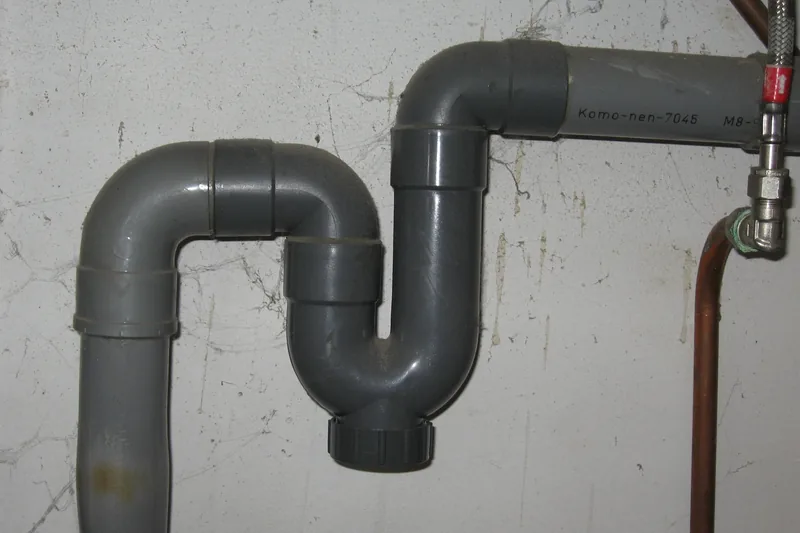

When water reaches sockets, cables or appliances, keep away. Do not try to unplug them or reach a switch by crossing water. If there is immediate danger to people, move away and call 112. Comunidad de Madrid guidance treats water threatening an electrical installation as a situation requiring precautions, rather than a household check.
Where it drips may not be where it starts
Describe whether the water is on the cupboard floor, at a visible joint, on a pipe or beside the opening into the wall. It may have travelled along a surface before dripping. A photo of the puddle is not enough to decide that the trap needs replacing, a flexible connector tightening or the sink sealing.
| What you observed | What to note without causing more water to escape |
|---|---|
| It appears after using the sink | What use you remember and where you first saw the water |
| Water is visible even when the sink is not in use | When it started and whether it is still increasing |
| There are droplets on a cold surface | Which part is wet; cause unconfirmed |
| Water comes from the wall opening or another area | Location and possible effects on neighbours or communal areas |
Condensation is water changing from vapour to liquid; it is different from a pipe leak. Armacell explains this risk in cold air-conditioning pipes. That reference does not diagnose your kitchen: droplets on the outside of a pipe do not rule out a leak or prove that insulation is the solution.
You need to recognise the valve before turning off the water
The Bomberos de Madrid manual advises shutting off the water near a leak. Do this only if you identify a valve belonging to your installation and can reach it safely. Do not force a stuck valve or loosen joints. If you do not know what it controls or cannot limit the escape, seek direct help from a professional; do not try valves for other supplies or the building.
Wiping up a small amount with a cloth from a safe area may protect the cupboard floor while help arrives. Do not delay getting help to dry or photograph an ongoing escape. If communal elements are affected, also inform whoever manages the building. The source and responsibilities will need to be checked.
Information that helps with the inspection
- Exact place and time you found the water.
- Whether it happens when not in use or you associate it with earlier use, without repeating that use to test it.
- Which valve you closed and what you observed afterwards, if you could do so safely.
- An accessible overview photo and detail, without personal data or moving parts.
Once the situation is controlled, keep the references for installed items and tell the professional what happened. Distinguish repairing the cause, replacing a part and restoring damaged furniture or finishes: plumbing work does not automatically include the other tasks.