Slow drainage does not identify where the blockage is. Do not add more water or products to force a test.
If water collects in the sink, stop adding more. Do not fill the bowl to check how long it takes to empty or start an appliance connected to that drain while its condition remains unclear. Avoid turning observation into an overflow.
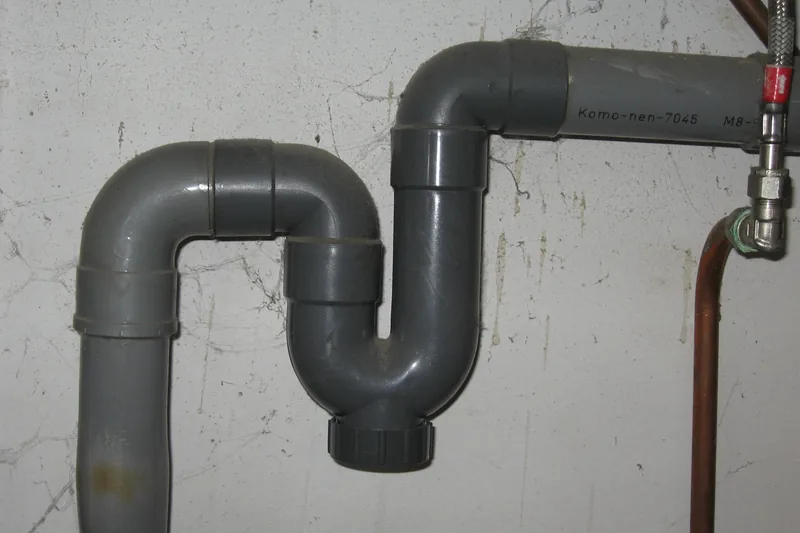

Look at what happens without inserting tools: whether water stays trapped, comes back through another point or the problem has occurred before. Note which items you have seen affected. One slow sink and several sanitary fittings with water backing up need different descriptions, although neither observation locates the blockage on its own.
Do not try to solve it by mixing products
Do not mix bleach, drain cleaners, acids or other cleaning products. The Instituto Nacional de Toxicología warns of irritant gases when bleach is combined with ammonia or acidic products, including some drain cleaners. A second product does not safely neutralise what is already inside.
If you have poured something in, do not add another substance or a homemade mixture. Keep the packaging and tell the professional the product, approximate amount and time of use before they work. Do not open the trap or use tools that could splash the retained liquid. If there are fumes, exposure or immediate danger, move away and seek emergency help.
How to prepare for the inspection
| Question | Useful detail |
|---|---|
| How long has it been happening? | First occurrence or previous episodes |
| Which point is affected? | One bowl, both or other appliances observed |
| Does the water drain or come back? | What you have seen, without refilling to test it |
| What has been used? | Products, tools or previous work |
| Is there access under the cupboard? | Obstacles and items you cannot move |
An overview photo can help identify the bowl and cupboard. If water rises elsewhere, describe where you observed it without touching or collecting wastewater to show it. If a shared section may be affected, inform whoever manages the building; the work should address the item established by inspection, rather than whichever seems nearest.
Avoiding further waste does not replace a repair
For everyday use, EMASESA recommends removing food scraps before washing and taking used oil to a recycling centre. These measures help protect the drainage system; they are not a remedy for a pipe that is already blocked. Do not pour in scraps, oil or another product just because the water has gone down a little.
Clarify with the professional whether the visit is to investigate the source, work on an accessible trap or assess another part of the installation. Do not order a trap replacement based only on slow drainage. If building work, access to a communal pipe or finish repairs are needed, ask for those tasks to be identified separately.
Before returning to normal use, ask what has been checked, what work was done and which limitations remain. Do not improvise a test using more flow or more products than specified for the installation.